


Introduction
Former US President Donald Trump has stated that anyone who openly disagrees with him would never be appointed as Chair of the Federal Reserve. The remark has sparked fresh debate around the independence of the US central bank, a principle long viewed as essential for economic stability and investor confidence.
The comments come as markets closely watch political signals that could influence future monetary policy decisions.
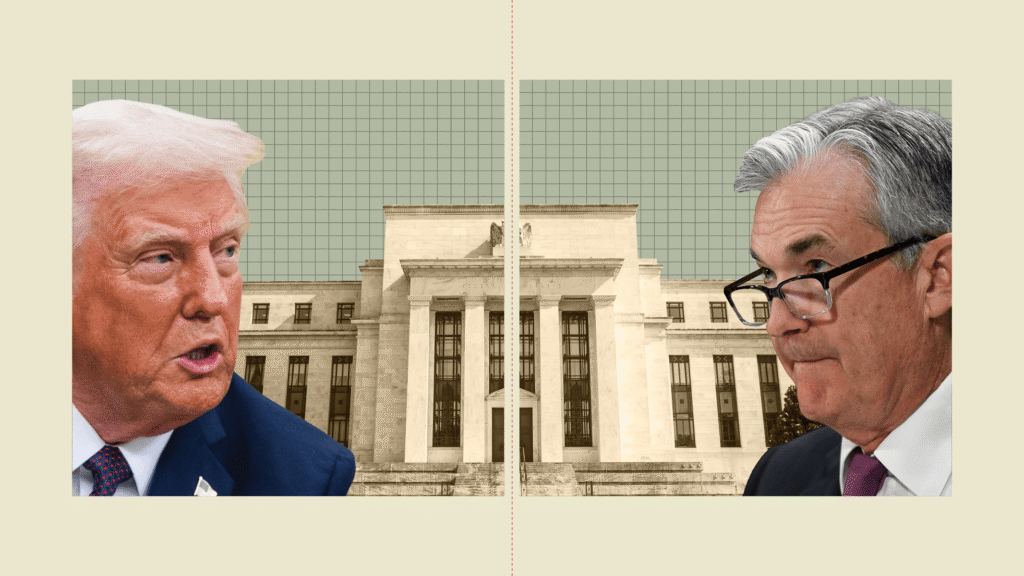
Why the Federal Reserve’s Independence Matters
The Federal Reserve is designed to operate independently from political pressure, allowing it to make decisions based on economic data rather than political priorities. This independence helps maintain credibility in controlling inflation, managing interest rates, and supporting long-term economic growth.
Any perception that political loyalty could influence Fed leadership raises concerns among economists and financial markets, as it may undermine trust in monetary policy decisions.
Market Reaction and Investor Sentiment
Financial markets tend to react quickly to statements that suggest potential interference in central bank operations. Even without immediate policy changes, such remarks can increase uncertainty around future interest rate decisions.
Investors generally prefer predictability. When questions arise about the Fed’s autonomy, volatility can increase across equities, bonds, and currency markets, particularly the US dollar.
Implications for Interest Rates and Inflation Policy
The Fed Chair plays a crucial role in shaping interest rate policy. If markets believe future leadership could be influenced by political alignment rather than economic expertise, expectations around inflation control and rate decisions may shift.
Analysts note that higher uncertainty around monetary policy can lead to tighter financial conditions, as investors demand higher risk premiums.
Broader Economic and Political Context
Debates over the Federal Reserve’s role are not new, but public statements targeting potential leadership choices tend to attract heightened scrutiny. With the US economy balancing inflation risks, growth concerns, and global uncertainty, confidence in institutions remains a key factor supporting economic stability.
While no immediate changes to Fed leadership have been announced, the comments have added to broader discussions about how politics and economic policy intersect.
What Investors Should Watch
Going forward, investors will closely monitor official policy proposals, nomination processes, and signals from current Federal Reserve officials. Concrete actions matter more than rhetoric, but repeated challenges to institutional independence can influence long-term market expectations.
Conclusion
Trump’s statement that critics would never be considered for the role of Fed Chair has reignited concerns about the importance of central bank independence. For markets and investors, maintaining trust in the Federal Reserve’s decision-making process remains critical, especially during periods of economic uncertainty.
As political discourse continues, financial markets will remain focused on actions, appointments, and policy signals that directly affect the future path of US monetary policy.
