


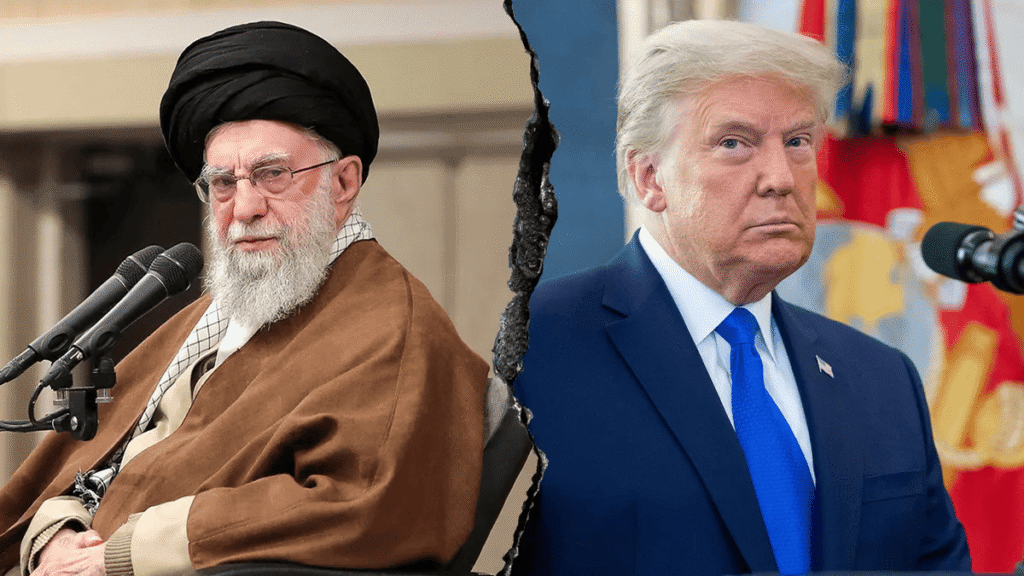
Former U.S. President Donald Trump has once again taken a hard-line stance on Iran, warning of severe consequences if Tehran moves toward developing weapons. The strong language has reignited concerns across global financial markets, where investors are closely watching how geopolitical tensions could impact oil prices, inflation, and overall market stability.
Geopolitical Rhetoric and Market Sensitivity
Markets tend to react sharply to escalating rhetoric involving the Middle East, particularly when it involves Iran — a major player in global energy supply. Trump’s comments signal a possible return to a more aggressive U.S. foreign policy approach if political leadership changes, adding uncertainty for investors already navigating high interest rates and slowing global growth.
Historically, even verbal threats related to Iran have been enough to push crude oil prices higher, as traders price in the risk of supply disruptions in the Strait of Hormuz, a key shipping route for global oil.
Energy Prices and Inflation Concerns
Any escalation involving Iran could have direct financial consequences:
- Oil prices may rise due to fears of sanctions or military conflict
- Higher energy costs could reignite inflation pressures in the U.S.
- Central banks may face renewed challenges in managing interest rate policy
For U.S. consumers and businesses, sustained increases in oil prices could translate into higher transportation costs, elevated consumer prices, and reduced corporate margins.
Impact on Stocks and Safe-Haven Assets
Geopolitical uncertainty often leads investors to rebalance portfolios. Defense stocks, energy companies, and commodities typically benefit from rising tensions, while broader equity markets may experience volatility.
At the same time, safe-haven assets such as gold and U.S. Treasury bonds could see increased demand if investors seek protection from geopolitical shocks. Currency markets may also react, with the U.S. dollar strengthening during periods of global uncertainty.
Policy Uncertainty Ahead of Elections
Trump’s remarks also highlight how foreign policy uncertainty can influence markets ahead of major political events. Investors are increasingly factoring in multiple political scenarios, including shifts in sanctions policy, military spending, and international trade relations.
Even without immediate policy changes, strong rhetoric alone can shape expectations — a key driver of market behavior.
What Investors Should Watch
- Movements in global oil and gas prices
- U.S. defense and energy sector stock performance
- Inflation data influenced by energy costs
- Market reactions to future U.S.–Iran diplomatic developments
Bottom Line
Trump’s warning to Iran underscores how geopolitical risk remains a powerful force in financial markets. While no immediate action has been announced, investors are once again reminded that political statements can have real economic consequences. In an already fragile global environment, renewed Middle East tensions could become a key factor shaping market direction in the months ahead.
