

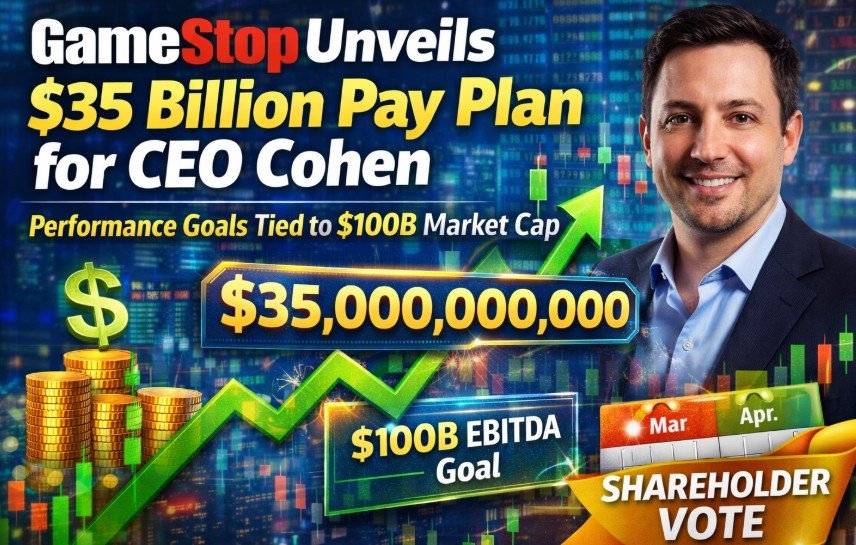

GameStop Unveils $35 Billion Pay Plan: GameStop Corp. (NYSE: GME) has shocked markets and investors with a bold new executive pay package valued at roughly $35 billion for its CEO, Ryan Cohen — but only if he delivers on extremely ambitious growth targets.
The performance-based compensation plan, announced Wednesday and pending shareholder approval in early 2026, ties Cohen’s reward entirely to major increases in GameStop’s market capitalization and cumulative profitability, marking one of the most aggressive incentive structures in modern corporate compensation history.
What’s in the $35 Billion Performance Pay Plan?
GameStop’s board has approved a stock-option award for CEO Ryan Cohen worth up to 171.5 million shares at $20.66 per share, potentially valued at approximately $35 billion if all performance hurdles are met. Reuters
Key elements include:
• Performance-based: No salary, no cash bonuses, no guaranteed equity — Cohen only earns if GameStop hits specified goals.
• Market Cap Target: GameStop must grow from roughly $9.3 billion today to $100 billion.
• Profit Target: The company must deliver $10 billion in cumulative EBITDA (earnings before interest, taxes, depreciation and amortization).
• Nine Tranches: Vesting occurs only in stages — starting from a $20 billion market cap and rising in $10 billion increments up to $100 billion.
Under this structure, Cohen’s compensation parallels the famous performance plan adopted years earlier by Tesla for Elon Musk, where payouts hinge entirely on ambitious long-term achievements.
Market Reaction: Stock Rises, Investor Buzz Builds
Following the announcement, GameStop shares climbed more than 4% in premarket trading, landing around $21.60 per share. This reflects cautious optimism among some traders that aligning the CEO’s compensation with shareholder returns could fuel strategic shifts especially as retail investors continue tracking GameStop’s meme-stock legacy.
Despite the rally, GameStop’s current market capitalization sits far below the targets outlined in the plan, underlining the scale of the challenge ahead.
Why This Matters
1. Alignment With Shareholders
By eliminating guaranteed salary and bonuses, GameStop has essentially bet its CEO’s payday on big results a move supporters argue aligns executive incentives with shareholder value creation.
2. Ambitious Targets
Hitting a $100 billion market cap requires a more than tenfold increase from current levels, a feat that would require dramatic growth in GameStop’s digital business, profitability and investor sentiment.
3. Approval Still Pending
The compensation plan must be approved by shareholders at a special meeting expected in March or April 2026, where Cohen will recuse himself from the vote.
The Broader Context: GameStop’s Evolving Strategy
GameStop has gradually pivoted from its traditional brick-and-mortar focus toward e-commerce and digital services to capture more market share in the gaming ecosystem — a necessary shift as gamers increasingly prefer online purchases.
Under Cohen’s leadership, GameStop has already made progress in reducing expenses and returning to profitability after years of losses. However, revenues and valuations remain a fraction of peak levels seen during the 2021 meme-stock surge.
What’s Next?
• Shareholder Vote: Approval expected in March–April 2026.
• Execution Challenge: Analyst focus will turn to quarterly results and strategic initiatives that demonstrate progress toward the lofty performance goals.
• Market Sentiment: Retail investors and institutional holders alike will watch closely for signs that GameStop is building sustainable value beyond its meme stock identity.
GameStop’s new $35 billion pay plan for CEO Ryan Cohen represents an unprecedented “at-risk, results-only” compensation model in the corporate world, tying executive reward to transformative growth. While this has excited some investors and traders, it also underscores the steep performance climb required for Cohen to realize any of his potential payout.
ALSO READ – Intel Stock Surge Explained: AI Deals, Nvidia Investment & 18A Tech Fuel Rally, But Growth Concerns Persist
